Nyhed
Report warns: Danish homes aren’t designed for a changing climate
Lagt online: 11.11.2025
Nyhed
Report warns: Danish homes aren’t designed for a changing climate
Lagt online: 11.11.2025
Report from AAU Warns: Danish homes aren’t designed for a changing climate
Nyhed
Lagt online: 11.11.2025
Nyhed
Lagt online: 11.11.2025
By Simon Danneskiold-Samsøe and Thomas Møller Christensen, AAU Communications and Public Affairs
Photo: Colourbox
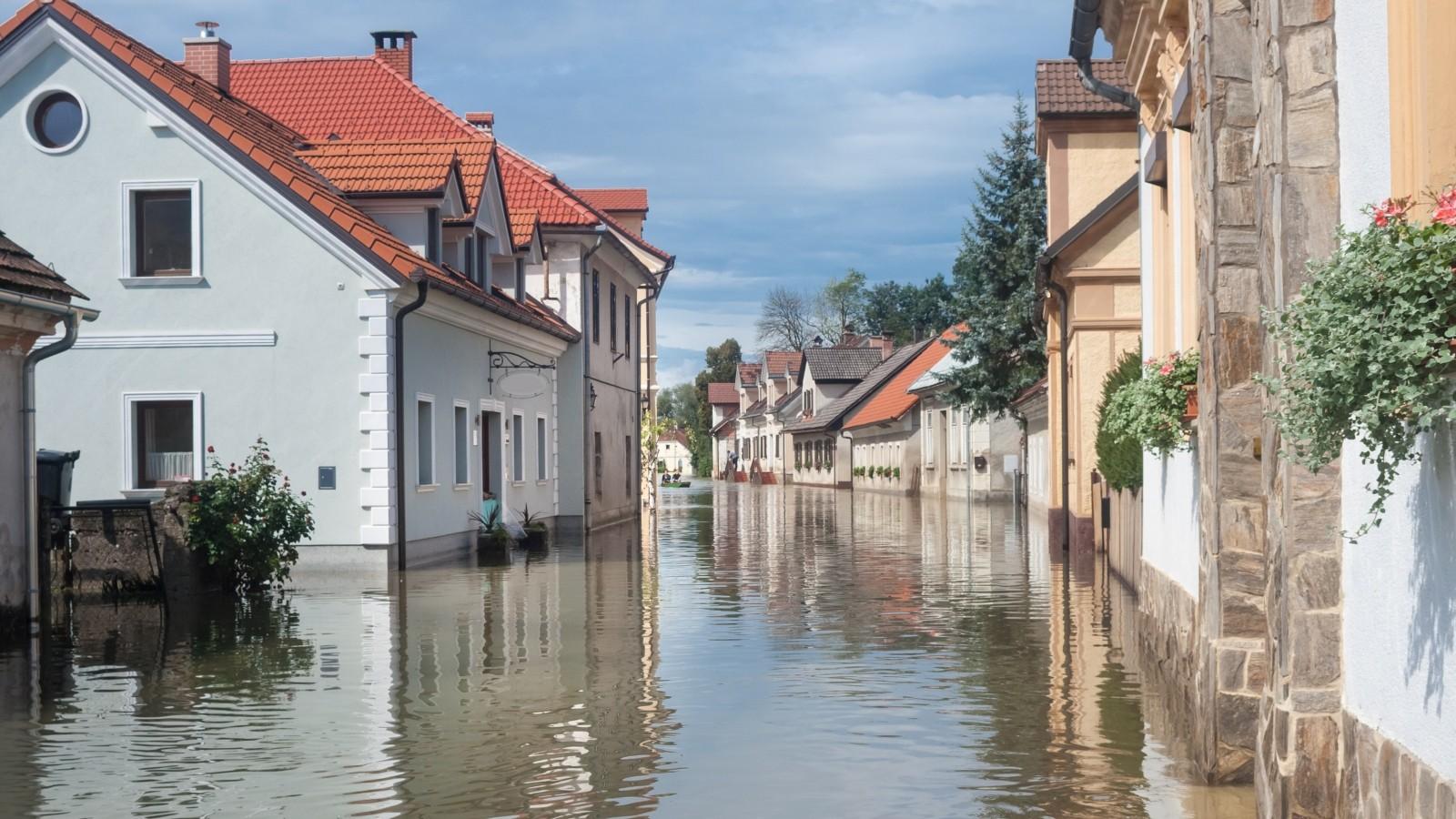
“What good is low energy consumption if the basement floods, the ventilation system breaks down during a heatwave, or the materials decay from moisture?”
That’s the question posed by Torben Valdbjørn Rasmussen, Senior Researcher at BUILD - Department of the Built Enviroment. Together with a group of researchers, he has authored a new report that asks: Are Danish buildings ready for the climate of the future?
The answer, he says, is clear and concerning: They are not.
The report reveals that extreme rainfall, heatwaves, and rising groundwater levels are already affecting Danish homes and infrastructure. And these challenges are expected to intensify dramatically in the coming decades. Despite this, most new buildings are still designed for today’s weather rather than the harsher conditions projected for the next 50 to 75 years.
“Although there has been great political and technical focus on energy consumption and insulation, climate adaptation is still treated as secondary - as if the weather of the future were just a footnote,” explains Torben Valdbjørn Rasmussen.
Buildings often stand for many decades, making it a serious problem that both new construction and renovations are still based on outdated climate assumptions.
The report also finds that existing buildings are rarely updated to withstand changing conditions, even though many are already showing signs of stress.
“We see it in buildings that are only a few decades old: flooded homes, overheated apartments, and moisture-damaged structures. These buildings were constructed according to the standards of their time but those standards no longer hold up,” says Torben Valdbjørn Rasmussen.
According to the report, building standards need to evolve alongside the climate. Future buildings must not only be robust, but also adaptable - capable of being modified, repaired, or reconfigured as new challenges emerge.
“We need to build with the possibility of change, replacement, and adaptation in mind - anticipating which parts of buildings might be challenged in the future, while also preparing for the unexpected,” Torben Valdbjørn Rasmussen emphasizes.
He adds that climate adaptation is not only about shielding buildings from water, heat, and moisture. It is about embedding flexibility into the very logic of how we design and construct.
“We must acknowledge that the world is changing - and the way we build must change with it," he says.
Facts: How the Study Was Conducted
The researchers analyzed climate projections up to the year 2100 to understand how changing weather patterns will affect building performance. They identified the most critical factors such as extreme rainfall, heatwaves, and rising groundwater levels and evaluated whether current building regulations are sufficient or in need of revision.