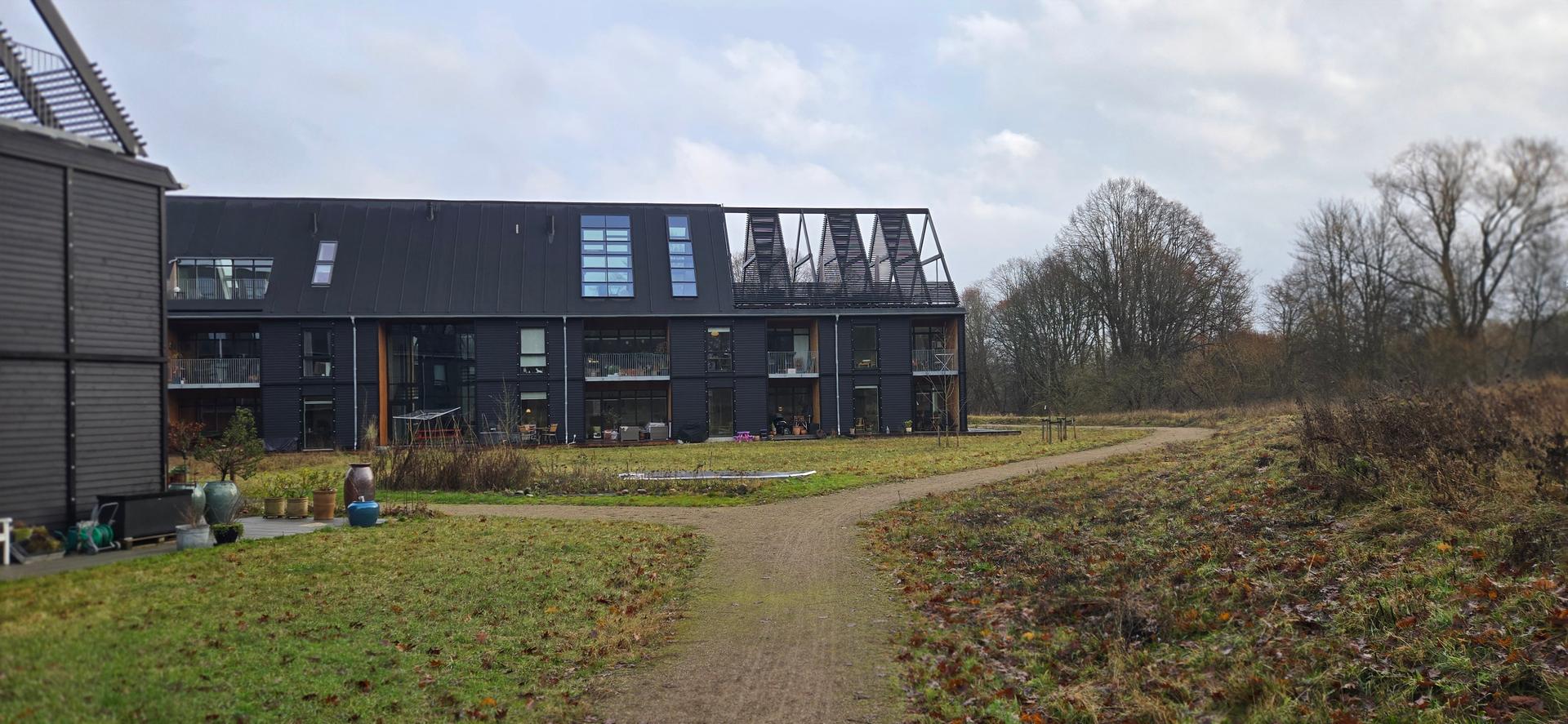
Since 2020, four new homes in co-housing communities have been built every day. This represents a genuine construction boom, and researchers describe the 2020s as the decade of co-housing. As a result, the number of Danes living in co-housing communities has doubled since 2015, and the trend appears likely to continue.
A comprehensive new report from the Department of the Built Environment (BUILD) at Aalborg University (AAU) shows that more than 160 new co-housing communities, containing over 8,000 housing units, have been established nationwide since 2020. This represents substantial growth compared with previous decades.
“Co-housing communities are no longer a niche phenomenon. They have increasingly become an integrated part of the Danish housing market and are being chosen by many Danes. It is particularly the generation that grew up in detached houses and now finds themselves with more space than they need that is driving this development, but they are far from alone. Families, young people, and single residents are also seeking the opportunities and sense of community offered by co-housing to a much greater extent than before,” says Jesper Ole Jensen, Senior Researcher at BUILD and co-author of the report.
Senior Co-Housing Communities Still Dominate
Senior co-housing communities form the backbone of this development and account for approximately two-thirds of all co-housing communities in Denmark. They address the desire for community, security, and an active later life. At the same time, the analysis points to a significant rise in intergenerational co-housing communities, where families, single residents, and seniors live side by side.
Growth in eco-villages has stagnated, although sustainability continues to play a central role. In many newer co-housing communities, environmentally friendly solutions and shared resources have become standard features.
From Community Initiatives to Professional Developers
One of the researchers’ most notable findings is a structural shift in who is responsible for developing co-housing communities. Historically, co-housing communities were built by committed individuals with a vision of stronger community living, but today development has become largely commercialized.
More than 90 percent of all new housing units established since 2020 have been developed by private developers, investors, and non-profit housing organizations. The average size has increased from fewer than 20 homes in previous decades to more than 50 homes today, and some new projects accommodate several hundred residents.
“The arrival of commercial players in the market has meant that there are now far more options available. It is much easier today to find a co-housing community tailored to one’s preferred balance between privacy and community. At the same time, we see that co-housing communities have shifted geographically. Whereas they were previously often located in remote rural areas, they are now situated along transportation corridors leading to larger cities, making it possible to combine community living with careers and commuting,” says Stephen R. Lloyd-Moffett, Professor at the California Polytechnic State University and co-author of the analysis.
The report is based on the most comprehensive mapping of Danish co-housing communities conducted to date and combines data from a wide range of national and international sources.
Read the full report